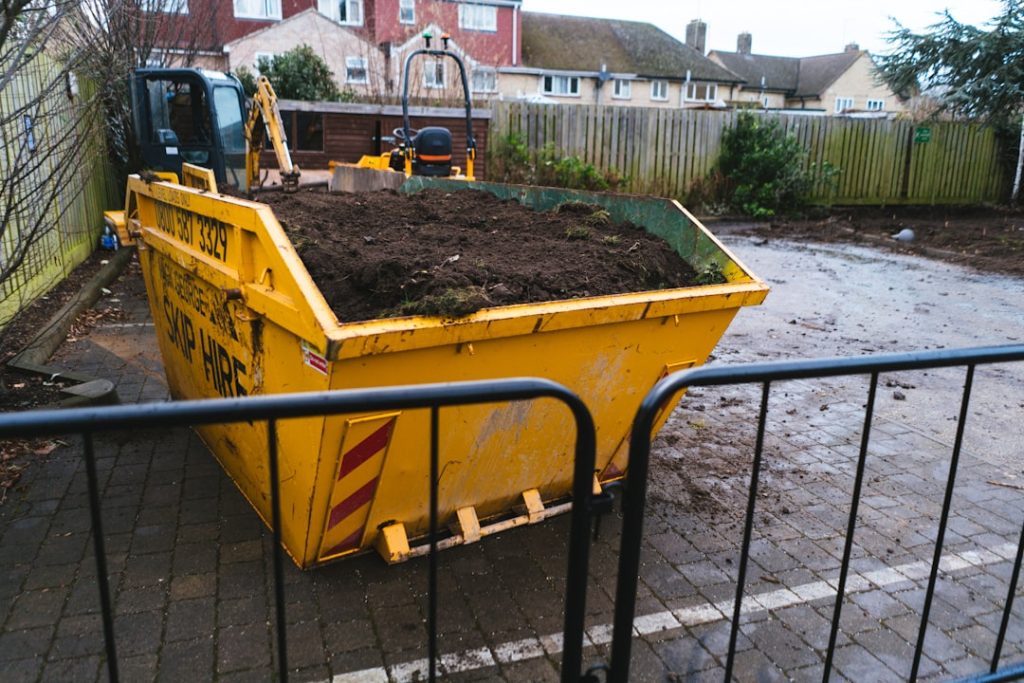
Hiring a skip sounds simple — until you’re faced with a list of sizes in cubic yards and no idea which one fits the job. Order too small and you’re paying for a second skip; too big and you’ve wasted money on space you never filled. Here’s how to get it right first time.
Start with the type of waste, not the amount
Before size, think about what you’re throwing out. A kitchen refit produces bulky but light waste; a garden or building job produces heavy rubble and soil. Heavy waste fills a skip by weight long before it fills it by volume, so a smaller skip is often the right call for soil, bricks and concrete.
The main skip sizes explained
- Mini (2–3 yd): small clear-outs, single rooms, garden tidies. Roughly 25–35 bin bags.
- Midi (4–5 yd): kitchen or bathroom refits, small renovations.
- Builders (6–8 yd): the workhorse — construction waste, larger home projects, heavy rubble.
- Roll-on/roll-off (20–40 yd): commercial sites and major clearances with bulky, lightweight waste.
Don’t forget access and permits
A skip on your own driveway needs no permit. One on a public road does — and that’s arranged through your council, usually via the skip company. Check there’s clear access for the lorry, too; a tight lane can rule out the bigger sizes.
And before you book — could it be reused?
Skips are for what’s genuinely waste. Usable materials, furniture and equipment are often better rehomed or recycled first, which cuts your skip size (and cost) and keeps good materials out of landfill.
Not sure which size you need? Browse our skip hire guidance to match the skip to the job.